

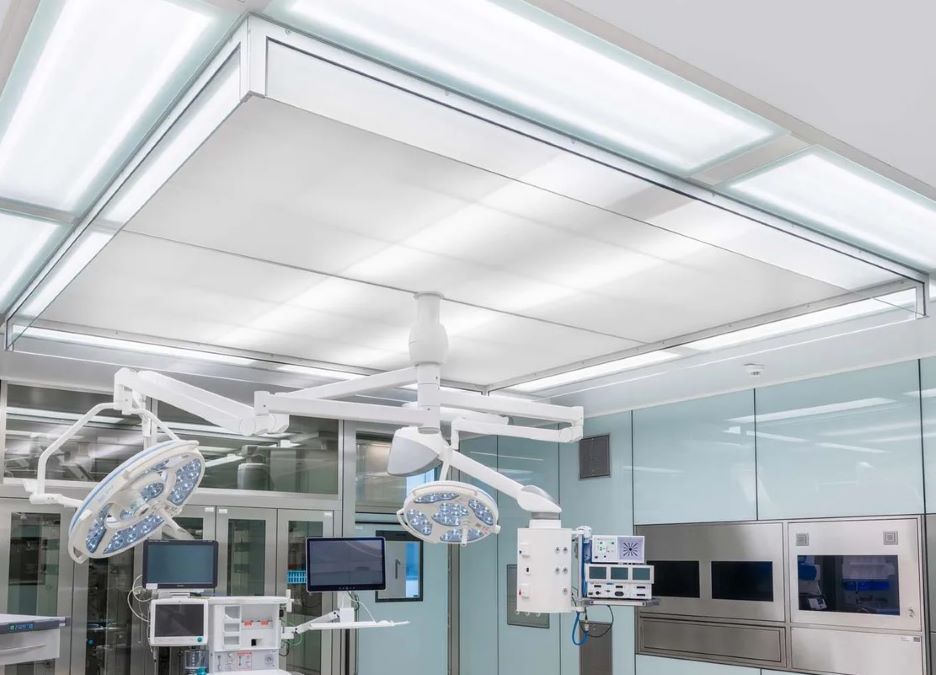
Why Is the Use of Laminar Flow Units on Operating Tables Important?
Laminar flow units on operating tables provide sterile airflow through HEPA filters, preventing microorganisms and particles from reaching the surgical site. This reduces the risk of infection and increases surgical success, particularly in prosthetic and implant surgeries. Laminar airflow prevents external contamination, optimizing patient safety and surgical outcomes.
The use of laminar flow units in operating rooms is critical for maintaining sterility and minimizing infection risk. Key reasons for their importance include:
-
Prevention of Airborne Infections
Laminar flow systems filter particles and microorganisms (via HEPA filters), delivering clean air directly to the surgical field. This is especially vital in prosthetic surgeries, where infections can lead to serious complications. -
Protection of the Sterile Field
The unit creates a turbulence-free (laminar) airflow, preventing contamination from the surrounding environment. Movements of the surgical team or external air currents do not compromise the sterile area. -
Increased Surgical Success Rates
In areas such as orthopedics and neurosurgery, the risk of postoperative infection in patients receiving implants or foreign objects is significantly reduced. -
Reduction of Microbial Load
HEPA filters capture 0.3-micron particles with 99.97% efficiency, preventing the spread of bacteria, fungi, and viruses. This effectively controls hospital-acquired infections (SSI – Surgical Site Infection). -
Compliance with Standards and Protocols
International surgical guidelines (WHO, CDC, AORN) and sterility protocols recommend laminar flow use in high-risk surgeries. Hospitals also monitor these systems during accreditation processes. -
Patient and Staff Safety
Laminar flow units improve patient recovery and optimize the working environment for the surgical team.
Summary:
Laminar flow units maintain aseptic conditions in the operating room through controlled airflow, enhancing both patient safety and surgical outcomes. They are indispensable for long surgeries involving open wounds.
