
Description
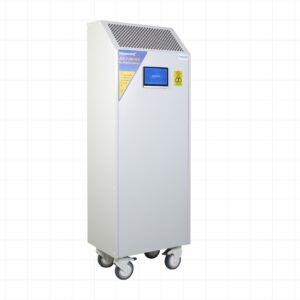
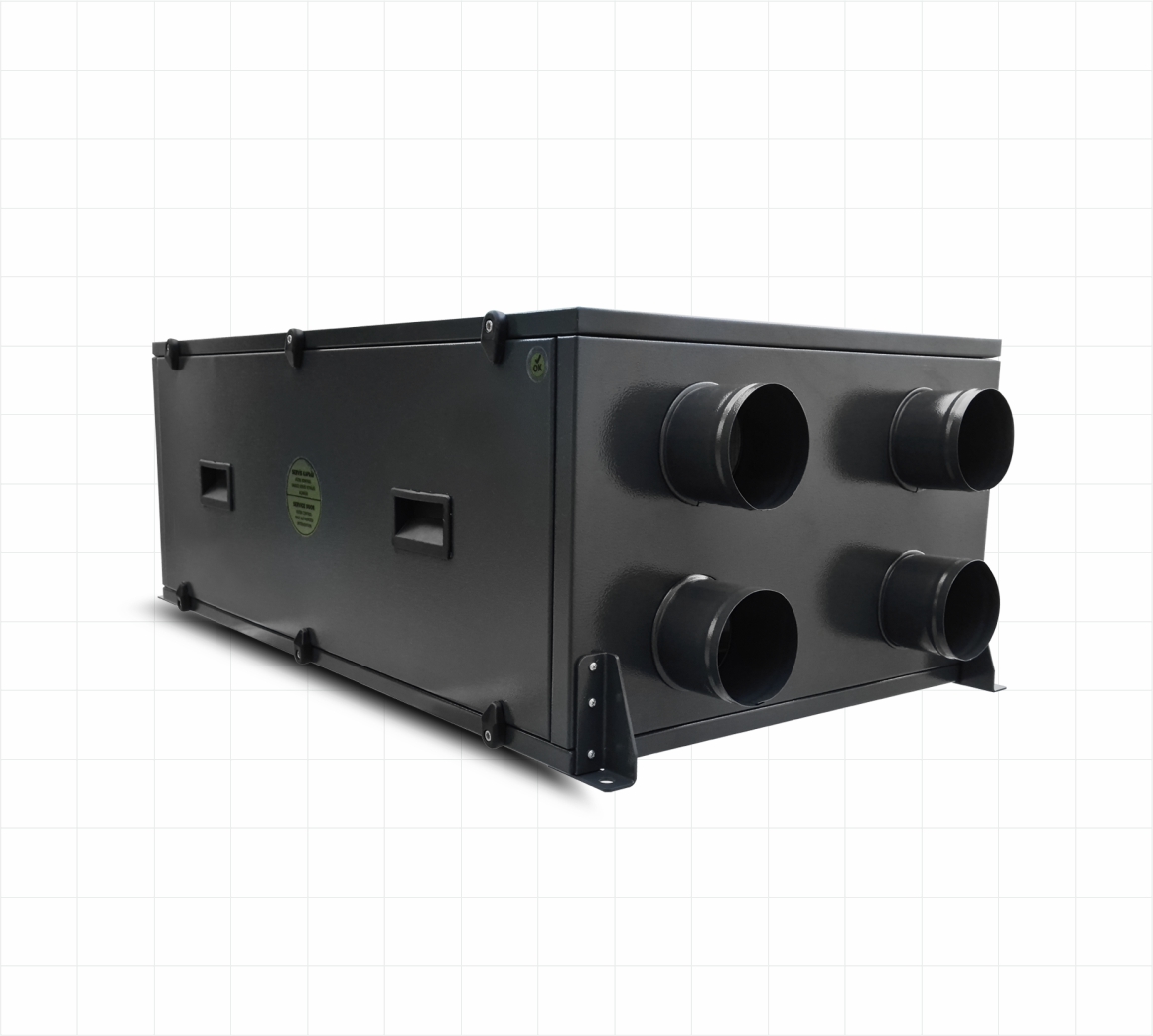
Duct-Type Air Purification Units can be easily positioned in different areas with flexible connection solutions, offering an effective air purification solution in critical environments such as hospitals, clinics, laboratories, hygienic facilities, and food processing areas.
The HC Series units are user-friendly thanks to their high filtration operating principle and energy efficiency. With the digital control panel, the filter status can be monitored, fan speeds can be adjusted, and operating time can be tracked. The optionally available UV-C sterilization module provides an extra layer of disinfection, further reducing the pathogen load in the air. Designed with the safety of both healthcare professionals and patients in mind, the Hepavent HV Series is an ideal solution to meet today’s hygiene standards.
APPLICATION AREAS OF OUR UNITS
1. Patient Rooms / Isolation Rooms
-
Air purification in areas with infected or immunocompromised patients
-
Prevention of cross-contamination against infectious diseases
-
Support for negative or positive pressure scenarios (with additional fan models)
2. Laboratories (Microbiology, Genetics, Chemistry, etc.)
-
Prevention of airborne contamination
-
Performing samples and analyses in a sterile environment
-
Providing temporary support to different laboratories thanks to portability
3. Dental Clinics and Oral Health Centers
-
Air purification during aerosol-generating procedures
-
Reducing infection risk for both patients and healthcare personnel
4. Polyclinics and Examination Rooms
-
For areas requiring rapid air purification
-
Used in waiting rooms, doctor’s offices, and short-term patient reception areas
5. Sample Collection and Testing Areas (e.g., COVID-19)
-
Reducing viral load in areas where PCR testing or sample collection is performed
-
Protecting healthcare workers from airborne infectious agents
6. Pharmacies and Drug Preparation Areas
-
Ensuring that medicines are prepared under sterile conditions
-
Maintaining hygiene in areas where over-the-counter products are processed
7. Home Healthcare / Home Patient Care
-
Providing clean air support for patients under home treatment, especially those with weakened immune systems
-
Easy to use in patient rooms thanks to portability
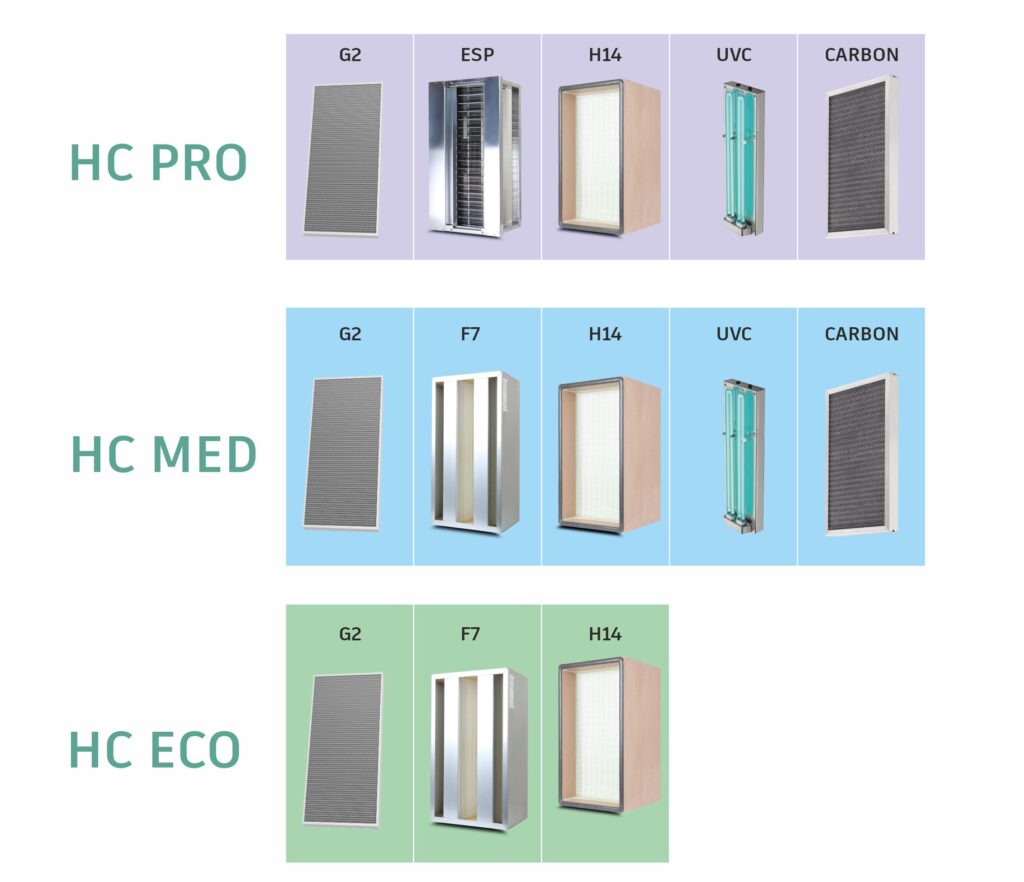
H14 CLASS HEPA FILTER
-
Definition and Features
H14 HEPA (High Efficiency Particulate Air) filters are high-efficiency particle retaining air filters classified according to the EN 1822 standard. These filters can capture particles as small as 0.3 microns with an efficiency of ≥ 99.995%.
Efficiency: ≥ 99.995% (for 0.3 micron particles)
Test Standard: EN 1822-1:2019
Applications: Sterile environments, operating rooms, laboratories, pharmaceutical production facilities, intensive care units -
Use in the Healthcare Sector
H14 HEPA filters are used in hospitals and other healthcare facilities where air quality is critical:
Operating Rooms: Filtering airborne particles and microorganisms during surgical procedures.
Intensive Care Units (ICU): Providing sterile air for immunocompromised patients.
Isolation Rooms: Preventing the spread of infectious diseases (e.g., tuberculosis, COVID-19).
Laboratories and Biosafety Cabinets: Preventing pathogens from entering the air.
Pharmaceutical Manufacturing Facilities (GMP Environments): Ensuring particle-free air for sterile production processes. -
Advantages
High filtration efficiency (viruses, bacteria, fungal spores, allergens).
Also known as EU14 class, considered the gold standard in medical applications.
Available with antimicrobial coating option. -
Maintenance and Replacement
Leak tests (DOP/PAO test) should be performed regularly.
Service life varies between 6 months and 2 years depending on dust load.
In hospital HVAC systems, pre-filter + H14 combination is commonly used.
Conclusion
H14 HEPA filters are indispensable for reducing hospital-acquired infections and ensuring sterile conditions in the healthcare sector. Their use in surgical areas and critical care units is mandated by international standards (ISO 14644, WHO). For detailed technical specifications, refer to EN 1822 or ISO 29463 standards.
ELECTROSTATIC FILTER (ESP)
Electrostatic filters are air filtration systems that use electrostatic forces to clean airborne particles. These filters are designed to efficiently capture dust, pollen, microorganisms, smoke, and similar fine particles. They generally work as follows:
Pre-Filtration: Large particles are captured in the first stage.
Ionization: Particles in the air are ionized via an electric field, gaining an electric charge.
Collector Cell: Charged particles are attracted to oppositely charged metal plates, adhere to the filter, and are removed from the air.
In the healthcare sector, especially in operating rooms, intensive care, laboratories, and sterile environments, top-level air quality is required. Electrostatic filters are used in these environments for the following purposes:
-
Capturing Microbes and Particles:
Biological contaminants such as bacteria, viruses, and fungal spores can remain airborne. Electrostatic filters can capture these particles at rates up to 99%.
They are used together with or before HEPA filters to increase overall system efficiency. -
Reducing Chemical Contaminants:
Chemical fumes and vapors released in laboratories can also be captured by these filters. -
Energy Efficiency:
Due to low pressure drop, energy consumption is lower compared to traditional HEPA filters.
They are washable, making them more durable and environmentally friendly.
Advantages
High particle capture efficiency (including PM1)
Low operating cost
Long lifespan (washable design)
Compatibility with HEPA filters
Improves air quality and reduces infection risk
ULTRAVIOLET LAMP (UVC)
-
Definition and Working Principle
UVC (Ultraviolet-C) filters are a disinfection technology that uses UV light at a wavelength of 254 nm to inactivate airborne microorganisms (viruses, bacteria, fungal spores).
Basic Operating Mechanism:
-
DNA/RNA Damage: UVC rays disrupt the genetic material of microorganisms, preventing them from reproducing.
-
Integration with Airflow: Integrated into HVAC units or portable air purifiers.
-
Passive Disinfection: Does not provide physical filtration but can be combined with HEPA or electrostatic filters.
-
Applications in the Healthcare Sector
UVC filters are widely used in hospitals for infection control:
-
Operating Theatres and Intensive Care Units (ICU): Reducing airborne pathogens in surgical areas. Preventing biofilm formation.
-
Hospital Corridors and Waiting Areas: Preventing the spread of airborne diseases such as COVID-19, influenza, and tuberculosis.
-
Laboratories: Preventing pathogens from surviving in the air.
-
Supplement to Central HVAC Systems: Providing sterile air in compliance with ASHRAE Standard 185.2.
-
Advantages
-
High Microbial Inactivation:
Up to 99.9% effectiveness (proven against pathogens such as SARS-CoV-2, MRSA, E. coli).
Neutralises microorganisms accumulated on HEPA filters with UVC.
ACTIVATED CARBON FILTER
-
Definition and Working Principle
Activated carbon granule filters are made from highly porous carbon-based materials and capture volatile organic compounds (VOCs), odours, gases, and chemical vapours in the air through adsorption.
Basic Operating Mechanism:
-
Physical/Chemical Adsorption: The large surface area of carbon (500–1500 m²/g) attracts and traps harmful molecules.
-
Gas Filtration: Absorbs medical pollutants such as formaldehyde, ammonia, ozone, and anaesthetic gases (sevoflurane).
-
Micro-Porous Structure: Pores ranging from 0.5–50 nm enable molecular-level filtration.
-
Applications in the Healthcare Sector
Activated carbon filters are critical for chemical and gas cleaning in hospitals:
-
Operating Theatres and Surgical Areas: Filters anaesthetic gas residues (N₂O, halothane) to protect staff health. Absorbs disinfectant vapours (hydrogen peroxide).
-
Laboratories and Pathology Units: Prevents the release of carcinogenic chemicals such as formalin and xylene into the air.
-
Oncology and Chemotherapy Preparation Units: Captures cytotoxic drug vapours (cyclophosphamide).
-
ICU and Patient Rooms: Reduces VOCs (from paint, cleaning agents) and unpleasant odours.
-
Advantages
✔ Wide-Spectrum Chemical Filtration: Can trap 300+ different gases and vapours (according to EPA data).
✔ Combination with HEPA: HEPA + activated carbon hybrid systems are used for both particulate and chemical filtration.
Conclusion
Activated carbon granule filters are indispensable for chemical and gas cleaning in the healthcare sector. When used together with HEPA filters in operating theatres, laboratories, and chemotherapy areas, they minimise both particulate and gas-based risks.
EC FAN TECHNOLOGY
-
Definition and Technical Features
EC (Electronically Commutated) Double Inlet Radial Fans are high energy-efficiency air movement systems that operate with brushless DC motor technology and can draw air from both sides.
Key Features:
-
Motor Technology: EC motors provide up to 90% energy efficiency through magnetic field control.
-
Double Inlet Design: Draws air from two directions with a symmetrical blade structure for even air distribution.
-
Smart Control: Precise speed adjustment via 0–10V PWM or Modbus RTU.
-
Applications in the Healthcare Sector
EC fans are critical components of air purification units in hospitals and laboratories:
-
Areas Requiring HEPA Filtration: Provides constant airflow in operating rooms and sterile rooms where high air quality is essential.
-
Hospital Corridors and Waiting Areas: Delivers quiet and efficient air circulation in COVID-19 and tuberculosis isolation rooms.
-
Laboratories: Provides an energy-saving solution for capturing chemical vapours.
-
Benefits
✔ Energy Saving: Consumes 30–50% less energy compared to AC fans.
✔ Quiet Operation: Noise level below 45 dB, increasing patient comfort.
✔ Precise Speed Control: Instantly responds to dynamic pressure changes (e.g., filter clogging).
✔ Long Lifespan: Maintenance-free bearing design with a lifespan of 100,000 hours.
✔ Heat Resistance: Stable performance in high temperatures (-20°C to +70°C).